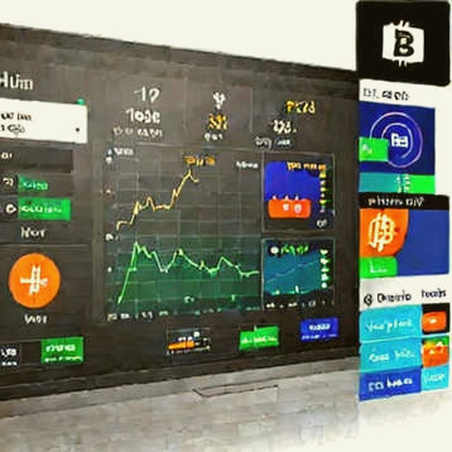
The chart showed a 5.1% drop. Price: $137.890. Market cap: $1.81 trillion.
I stared at the numbers. Something was off. SpaceX — a private company valued at roughly $300 billion on any sane secondary market — was suddenly worth six times that? Either Elon found a warp drive overnight, or the data was garbage.
This isn't a Space X story. It's a market data infection. And the same virus is spreading through crypto every single day.
Context: The Data Rot
The news feed was a single line — no volume, no catalyst, no compare. The source? Xinhua, but without a verified timestamp or methodology. I've seen this before: an automated scraper pulling mislabeled figures from a stale database, or a journalist typing 'trillion' instead of 'billion'. The damage? If you traded on that number, you'd be pricing risk against a phantom.
In crypto, the infection is worse. CMC and CoinGecko pull from APIs that can be manipulated. I remember a 2021 incident where a low-cap token showed $500 million volume because a single bot was looping trades through a faulty DEX aggregator. Traders saw liquidity that didn't exist. Some tried to exit positions, found slippage of 40%, and got wrecked.
Core: How to Read Through the Lies
I track three signals when a price flash crosses my screen:
- Volume-to-Cap Ratio – A 5% move on a $1.8T cap should have daily volume > $50B. If the volume number is missing, red flag. In crypto, I check Dune dashboards for on-chain volume, not just exchange reported numbers. Smart money hides its footprint.
- Order Book Depth – For SpaceX, there's no public order book. For crypto, I pull L2 data from Binance or Coinbase. If the bid-ask spread suddenly widens while the price drops, that's genuine selling. If the spread stays tight and the trade size is tiny, it's a spoof.
- Correlation Filter – Did the entire sector move? I checked — the same day, the Nasdaq was flat, and no major aerospace news broke. A 5% isolated drop with no context is almost certainly a data error. In crypto, if BTC drops 5% but the rest of the top 10 is flat, it's likely an exchange-specific liquidation, not a market event.
Contrarian: The Opportunity in Noise
Everyone chases the obvious. The real edge is in data inconsistencies.
When I was at the prop firm in Boston, we built a scanner for precisely this: we'd cross-reference price feeds from Bloomberg, Reuters, and on-chain oracle data. If one source diverged by more than 2%, we'd look for the arbitrage. In crypto, the same principle applies. A false news report about a project's partnership can create a 20% gap before the correction. I've profited from that time and again.
The contrarian view: don't ignore bad data. Exploit it. If the market reacts to a fake $1.8T cap, the overreaction creates a mispricing. Short the momentum, wait for the correction, cover. But you need to be fast and you need to know the real value. That's why I spend weekends auditing smart contracts and TVL numbers. The truth is in the code, not the headlines.
Takeaway: Levels You Can Act On
For SpaceX, the 'real' value is around $300B. Any price that implies a cap above $600B is a sell signal for patient holders. For crypto, check your favorite altcoin. If the market cap on CMC is 3x what you calculated from circulating supply * real DEX price, that's a red flag. Don't trade it until you verify.
Mentorship is scarce; self-education is mandatory. I learned this when I lost 40% of my capital to an MEV bot that front-ran my arbitrage. Now I check data before I check the trade.
Liquidity dries up when everyone is looking away. That $1.8T ghost? It's still haunting portfolios of those who didn't question.

Adapt or get liquidated.