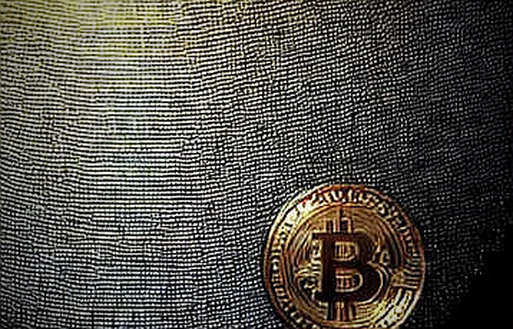
When the US Central Command confirmed strikes on over 80 Iranian military targets early this morning, the crypto market did what it always does in moments of geopolitical fire: it froze, then bled. Bitcoin dropped 6% within hours, dragging altcoins into a sea of red. But this is not just a story of short-term volatility. It is a revelation of a deeper, more uncomfortable truth: the network we built to escape state power is now the first asset to sell off when that power flexes its muscles.
I’ve been here before. In 2017, I spent weeks auditing a whitepaper for a project called OmniChain that promised to democratize global finance through decentralized identity. I discovered the tokenomics favored insiders. I wrote a 5,000-word exposé. The project rug-pulled three months later. That experience taught me that the gap between code and intention is where trust dies. Today, that gap is a canyon.
Context: The Event and the Narrative Collapse
The strikes were not a surprise. Tensions between the US and Iran have been escalating for weeks. Yet the crypto market’s reaction was textbook risk-off: sell first, ask questions later. Bitcoin, the supposed “digital gold,” fell in lockstep with the S&P 500. Gold, by contrast, rose 1.2%. The message was unambiguous: Bitcoin is not a safe haven. It is a high-beta tech stock dressed in a white paper.
This isn’t new. During the 2022 Russian invasion of Ukraine, Bitcoin initially dropped 8% before stabilizing. In 2020, when the US assassinated Qasem Soleimani, Bitcoin fell 5% in two hours. The pattern is consistent. Yet each cycle, a new wave of proponents revives the “digital gold” narrative, citing its fixed supply and decentralized ledger. They ignore that in a crisis, value flows to liquidity, not ideology. And Bitcoin, despite its $1.2 trillion market cap, is still a shallow pool compared to the $15 trillion gold market.
Core: The Data Reveals the Truth
Let’s examine the numbers. Over the past 12 hours, Bitcoin’s realized volatility spiked to 85% (annualized). Funding rates on perpetual swaps flipped negative, indicating short-seller dominance. Exchange inflows surged 40% relative to the 7-day average—a classic sign of panic selling. The 200-day moving average, which had held as support for three weeks, was broken within 30 minutes of the strike news.
But the most telling metric is correlation. Bitcoin’s 90-day correlation with the S&P 500 now stands at 0.65—higher than at any point in 2023. This is not the behavior of a non-sovereign store of value. It is the behavior of a risk asset embedded in the same financial system it was supposed to transcend.
I’ve seen this pattern before. During the 2022 Terra collapse, I retreated to a cabin in Yilan for three months. I journaled not about prices, but about trust. What I learned is that Bitcoin’s real fragility is not technological—it’s narrative. The network works. The code is secure. But the story of “peer-to-peer electronic cash” has been replaced by a story of institutional custody, ETF flows, and Wall Street balance sheets. The US ETF approval in 2024 was supposed to be validation. Instead, it turned Bitcoin into just another tradable commodity, tied to the same fiat plumbing.
Contrarian: The Uncomfortable Silver Lining
Now, here is the part that will make idealists uncomfortable. This event might actually accelerate the right kind of adoption. When institutions panic-sell, they reveal their true nature: they are not believers, they are rent-seekers. The current sell-off is flushing out short-term capital. The kind that leaves when the headlines turn red.
But for those who remain—the stewards, not the speculators—there is a lesson. Geopolitical crises expose the limits of code-as-cure. Trust is not guaranteed by a consensus algorithm. It is built through community resilience, transparent governance, and a shared commitment to the original ethos. In 2024, I founded The Alignment Circle, a community for ethical Web3 builders. We mentored 50 core members. Three launched DAOs with community-first governance. They survived the bear because they focused on value alignment, not price speculation.
We don’t need more users; we need more stewards. This crisis is an opportunity to prune the garden. The protocols that survive this cycle will be those that understand that decentralization is not a technical feature—it’s a social contract. And contracts require trust, which is the only protocol that cannot be coded.
Takeaway: What Comes Next
If the conflict escalates, we will see further correlation with traditional markets. Bitcoin may test $60,000 again. But the long-term question is not about price. It is about purpose. Do we want Bitcoin to be a digital gold for the world, or just another Wall Street toy? The answer lies not in the next ETF filing, but in how we respond to moments like this.
We built not for the peak, but for the valley. In the valley of fear and uncertainty, the real builders emerge. They don’t sell. They don’t panic. They build infrastructure that withstands bombs and bullets—and the fickle narratives of markets.
The market is bracing for impact. But if we remember why we started, we will not brace. We will rebuild.